Header

Skip to main content

Slider

Rare Disease Summit 2026

The annual Boston Globe Rare Disease Day Summit is a day of curated, in-person thought leadership addressing how Boston companies are tackling rare diseases and helping patients who are afflicted by them. Over 1,000 were expected to attend this virtual event on February 24, 2026.

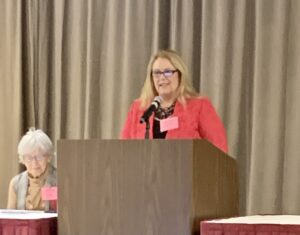
During the morning session, Mackenzie and Deb Boedicker from Mackenzie’s Mission joined Gianluca Pirozzi from Alexion for a panel session titled   “Living It, Leading It: When Lived Rare Disease Experience Becomes Professional Purpose”

Many patients, caregivers and professionals in the rare disease community often carry their personal experiences into their work, influencing how they approach care, advocacy, research and industry. This panel centered on shared lived experience as a catalyst for purpose and action across the rare disease ecosystem. Featuring perspectives from a patient turned healthcare provider, a parent and nonprofit leader, and an industry executive and caregiver, panelists will share how lived experience has shaped their professional paths. Through personal stories, the discussion explored where the system continues to fall short and what must change to create a more connected and responsive future for rare disease patients and their families.

As the lead sponsor of this event, it was an opportunity to highlight Alexion’s leadership and commitment to advancing rare disease care, while connecting directly with the people whose lives are shaped by this work. Thank you, Alexion!

Light Chain (AL) Amyloidosis Clinical Practice Guidelines – American Society of Hematology 2026

The American Society of Hematology (ASH) has released new Clinical Practice Guidelines on the diagnosis of light chain (AL) amyloidosis, a rare and life-threatening bone marrow disorder. The guidelines present 12 evidence-based recommendations designed to help clinicians and facilitate early and accurate diagnosis of AL amyloidosis. Participating in the two-year research was a large group of multi-disciplinary amyloidosis experts, as well as Deb Boedicker from Mackenzie’s Mission/Amyloidosis Speakers Bureau. Below we summarize the 12 recommendations, followed by a link to the full publication. In addition, at the end you’ll find a link to a comprehensive Resource Center which support these Clinical Practice Guidelines.


The primary goals of these guidelines are to review, critically appraise and implement evidence-based recommendations that will enhance early detection, timeliness and accuracy of diagnosis of AL amyloidosis. Through improved provider and patient education of the available evidence and creation of evidence-based recommendations, these guidelines aim to provide clinical decision support that will result in clear diagnostic decision making with known potential outcomes and enable timely diagnosis of AL amyloidosis by multidisciplinary teams.

ENHANCING CLINICAL SUSPICION

Should serum and urine immunofixation (SIFE and UIFE) and serum free light chains (sFLC) be used to increase suspicion of AL amyloidosis in individuals with cardiac symptoms?
Recommendation 1

For individuals with suspected cardiac amyloidosis, the ASH Guideline Panel recommends the use of serum and urine immunofixation (SIFE and UIFE) and serum free light chain (sFLC) assay to increase clinical suspicion of cardiac AL amyloidosis.

Should serum and urine immunofixation (SIFE and UIFE) and serum free light chains (sFLC) be used to increase suspicion of AL amyloidosis in individuals with unexplained proteinuria?
Recommendation 2

For individuals with unexplained proteinuria, the ASH Guideline Panel suggests performing paraprotein testing (SIFE/UIFE/sFLC) to increase clinical suspicion of AL amyloidosis.

Should cardiac MRI (CMR) be used to diagnose cardiac AL amyloidosis in individuals suspected of having cardiac amyloidosis (positivity in any of the following studies: SIFE, UIFE, or sFLC, abnormal cardiac biomarkers, and non-diagnostic echocardiographic findings)?
Recommendation 3

For individuals with positivity in any of the following studies SIFE, UIFE, or sFLC, and abnormal cardiac biomarkers, and non-diagnostic echocardiography, the ASH Guideline Panel suggests performing cardiac magnetic resonance (CMR) rather than not performing CMR to increase clinical suspicion of cardiac amyloidosis.

Should cardiac MRI (CMR) be used to diagnose cardiac AL amyloidosis in individuals with abnormal cardiac biomarkers, echocardiography, and positivity in any of the following studies: SIFE, UIFE, or sFLC?
Recommendation 4

For individuals with positivity in any of the following studies SIFE, UIFE, or sFLC, and abnormal cardiac biomarkers, and echocardiography consistent with amyloidosis, the ASH Guideline Panel suggests against performing cardiac magnetic resonance (CMR) and instead performing tissue biopsy to diagnose cardiac AL amyloidosis.

DIAGNOSIS

Should Bone Scintigraphy with technetium 99m – pyrophosphate (PYP), technetium 99 m – 3, 3 diphosphono 1,2 propranodicarboxylic (DPD) and technetium 99 m-hydroxymethylene Diphosphonate (HMDP) be used to diagnose amyloidosis in suspected individuals?
Recommendation 5
For individuals with a suspicion of AL amyloidosis, the ASH Guideline Panel recommends against the use of bone scintigraphy (PYP, DPD, HMDP) for the diagnosis of AL cardiac amyloidosis.

Should Bone Scintigraphy (PYP, DPD, HMDP) be used to diagnose ATTR amyloidosis in suspected individuals?
Recommendation 6
For patients without evidence of a plasma cell disorder (normal serum free light chain levels and no monoclonal proteins on serum and urine immunofixation) and suspicion of cardiac amyloidosis, the ASH Guideline Panel recommends the use of bone scintigraphy (PYP, DPD, HMDP) for the diagnosis of Cardiac ATTR amyloidosis.

Should surrogate biopsy vs. cardiac biopsy be used to diagnose AL amyloidosis in individuals suspected to have cardiac amyloidosis?
Recommendation 7
For individuals with suspected AL cardiac amyloidosis with abnormal cardiac biomarkers, diagnostic echocardiogram, and positivity in any of the following studies: SIFE, UIFE, or sFLC, the ASH Guideline Panel suggests either starting with performing both fat pad sampling and bone marrow biopsy or with endomyocardial biopsy.

Should surrogate biopsy vs renal biopsy be used to diagnose AL amyloidosis in individuals suspected to have renal amyloidosis?
Recommendation 8
For individuals with suspected light chain renal amyloidosis and positivity in any of the following studies SIFE, UIFE, or sFLC, the ASH Guideline Panel suggests starting with performing both abdominal fat pad sampling and bone marrow biopsy over renal biopsy.

Should surrogate biopsy vs. peripheral nerve biopsy be used to diagnose AL amyloidosis in individuals suspected to have neurological amyloidosis?
Recommendation 9
For individuals with a monoclonal gammopathy and generalized small or large fiber peripheral neuropathy or autonomic neuropathy suspected of having AL amyloidosis, the ASH Guideline Panel suggests performing both fat pad sampling and bone marrow biopsy over nerve biopsy.

Should surrogate biopsy vs target organ biopsy be used to diagnose AL amyloidosis in individuals suspected to have AL amyloidosis with multiorgan presentation?
Recommendation 10
For individuals with suspected multiorgan AL amyloidosis, the ASH Guideline Panel suggests starting with surrogate biopsies (combination of fat pad sampling and bone marrow biopsy) over target organ biopsy if surrogate biopsies can be performed expeditiously. If endomyocardial biopsy or renal biopsy are more feasible than fat pad sampling and bone marrow biopsy, these symptomatic target tissues should be preferentially biopsied.

Should Congo Red Staining on bone marrow biopsy that has already been performed be used to diagnose AL amyloidosis in individuals with Multiple Myeloma and Smoldering Myeloma?
Recommendation 11
For individuals with plasma cell dyscrasias (multiple myeloma and smoldering multiple myeloma), the ASH Guideline Panel suggests performing Congo red staining on bone marrow biopsies that may have already been performed.

ORGAN INVOLVEMENT

In individuals with AL amyloidosis with no cardiac symptoms, should clinicians use cardiac biomarkers/investigations [BNP, NT-proBNP, troponin (I,C,T, Highly Sensitive), 2D Echo with strain, Cardiac MRI] or not to evaluate for cardiac involvement?
Recommendation 12
For individuals with proven AL amyloidosis and with no cardiac symptoms, the ASH Guideline Panel recommends performing cardiac biomarkers (high sensitivity troponin, and BNP or NT-proBNP) and cardiac imaging rather than not performing these tests to define the presence and extent of cardiac involvement at diagnosis.

KEY CONCLUSIONS

The use of serum immunofixation, urine immunofixation and serum free light chains enhances the clinical suspicion of AL amyloidosis. The diagnosis of AL amyloidosis can be made effectively through surrogate biopsies which require both a bone marrow biopsy and fat pad sampling. However, target organ biopsies may be favoured in certain clinical situations.

Overarching good practice statements:
1. The ASH panel agreed that it is essential to assess for major organ involvement in patients with confirmed AL amyloidosis, as this guides further management and risk stratification.
2. A multidisciplinary team is typically required for the timely and accurate diagnosis and management of AL amyloidosis.

=============================================================================

The red flag signs and symptoms provide a summarized way to elevate suspicion and hopefully accelerate the diagnostic timeline.

RED FLAG SIGNS AND SYMPTOMS FOR CARDIAC INVOLVEMENT

  1. HFpEF (heart failure with preserved ejection fraction)
  2. Moderate or Severe LVH in absence of a significant history of untreated hypertension on imaging.
  3. Echocardiogram: Severe left ventricular hypertrophy, advanced diastolic dysfunction, reduced left ventricular global longitudinal strain with an apical sparing pattern
  4. EKG/Arrhythmia: Low voltage and/or discordance between voltage on EKG and left ventricular wall thickness on imaging, pseudo-infarct pattern, and arrhythmias including atrial fibrillation, heart block, and ventricular tachycardia/ventricular fibrillation
  5. Elevated biomarkers (Troponin and NT-Pro BNP) in absence of CAD
  6. Constellation of symptoms suggesting cardiac, renal, and peripheral nervous system disease
  7. Low Flow, Low Gradient Aortic Stenosis

RED FLAG SIGNS AND SYMPTOMS FOR RENAL INVOLVEMENT

  1. Inability to tolerate ACE/ARB
  2. Change in hypertension status unexplained by medication i.e. intolerance/hypotension on previously tolerated therapy.
  3. Unexplained proteinuria (albumin predominant) without diabetes (or not thought to be related to be diabetes or any other reason) and positive laboratory tests (monoclonal proteins and/or abnormal light chains (must be clonal or above renal limits)
  4. Proteinuria in diabetic with positive monoclonal protein

RED FLAG SIGNS AND SYMPTOMS FOR NEUROLOGICAL INVOLVEMENT

  1. Small fiber neuropathy: pain and temperature impairments, allodynia and hyperalgesia
  2. Autonomic neuropathy: orthostatic hypotension, erectile dysfunction, diarrhea and/or constipation, gastroparesis, urinary dysfunction, sweating abnormalities, pupillary dysfunction and dry eye and mouth.
  3. Sensorimotor neuropathy: numbness, paresthesia, imbalance, weakness and atrophy.
  4. Autonomic, Small fiber or sensorimotor neuropathy unexplained by other causes, including diabetes.
  5. Abnormal nerve conduction studies/ electromyography, typically a sensory or sensorimotor neuropathy with axonal pattern.
  6. Carpal Tunnel Syndrome – bilateral, particularly with heart disease and a monoclonal protein
  7. Peripheral neuropathy with positive monoclonal gammopathy
  8. Rapid progression of neuropathy
  9. Constellation of symptoms suggesting cardiac, renal, and peripheral nervous system disease

RED FLAG SIGNS AND SYMPTOMS – OTHER

Liver Presentation

  1. Cholestatic (associated with raised serum alkaline phosphatase) not related to other disorders.
  2. Hepatomegaly not related to other disorders.

Gastrointestinal tract Presentation

  1. Unexplained diarrhea and/or constipation, weight loss, loss of appetite, early satiety, nausea, vomiting, abdominal pain, gastrointestinal bleeding

Other

  1. Easy Bleeding and bruising (associated with acquired factor X deficiency)

=============================================================================

LINK TO PUBLICATION IN BLOOD ADVANCES

=============================================================================

In addition, ASH provides a comprehensive Resource Center to support the Clinical Practice Guidelines. In this center, clinicians will find a significant library of resources including the following.

  • A snapshot of the ASH Clinical Practice Guidelines — “Diagnosis of Light Chain (AL) Amyloidosis: What You Should Know”
    • What it covers
    • Why it matters
    • Who it affects
    • What are the highlights
  • A Disease State Infographic
  • A Visual Summary: a concise visual aid intended to support understanding of the recommendations and to aid in clinical decision-making.
  • A Pocket Guide: a brief, evidence-based pocket guide intended to help physicians provide quality care to patients.
  • Teaching Slides: educational slides intended to teach about the diagnosis of amyloidosis.
  • Audit Report: A set of metrics intended to assess compliance with the ASH Clinical Practice Guidelines on Diagnosis of Light Chain Amyloidosis. This audit report can be used to identify quality gaps at your institution and improve care for patients with light chain amyloidosis.

LINK TO RESOURCE CENTER


AMVUTTRA is now FDA-APPROVED for ATTR-CM in U.S.

AMVUTTRA® (vutrisiran) was approved by the FDA in March 2025 for the treatment of the cardiomyopathy of wild-type or hereditary transthyretin-mediated amyloidosis (ATTR-CM) in adults to reduce cardiovascular mortality, cardiovascular hospitalizations and urgent heart failure visits.

The approval expands the indication for AMVUTTRA, which now becomes the first and only therapeutic approved by the FDA for the treatment of ATTR-CM and the polyneuropathy of hereditary transthyretin-mediated amyloidosis (hATTR-PN) in adults.

“AMVUTTRA is an RNAi therapeutic that works upstream to deliver rapid knockdown of TTR, addressing the disease at its source, with only four convenient subcutaneous doses per year. By rapidly knocking down TTR production, AMVUTTRA substantially decreases deposition of TTR fibrils, which form amyloid and cause irreversible cardiovascular damage and premature death in patients with ATTR-CM.” according to Alnylam’s press release.

Amvuttra

PRESS RELEASE

ATTRUBY (acoramidis) is now FDA-APPROVED for ATTR-CM in U.S.

Attruby (Acoramidis), was approved by the FDA on November 22, 2024 for ATTR-CM patients (both wild-type and hereditary) in the U.S.

Orally-administered, Attruby is a near complete TTR stabilizer (>= 90%), designed to reduce cardiovascular death and cardiovascular-related hospitalization. In addition, Attruby has been shown to preserve the native function of TTR as a transport protein of thyroxine and vitamin A.

To honor the courage of our U.S. clinical trial participants, BridgeBio will provide these patients Attruby free for life.

Attruby

PRESS RELEASE


ForgingBridges:  Patient Support Services

Congressional Hill Briefing, Improving Care for Veterans with Rare Diseases: Establishing a National Commission

We, with other members of the amyloidosis community, were proud to join an important meeting hosted by the Center for Patient Advocacy Leaders (CPALs). They hosted a Congressional Hill Briefing, Improving Care for Veterans with Rare Diseases: Establishing a National Commission, at the U.S. Capitol Visitor Center in Washington, DC. This briefing was designed to bring together Veterans/Veterans’ advocates, rare disease advocates, patients, and congressional staff to address unmet needs of Veterans with rare diseases and explore collective action to help ensure Veterans with rare diseases get the comprehensive, patient-centered care and treatment they need and deserve.

Mackenzie’s Mission at the Bradley Z Naifeh Amyloidosis Conference 2024!

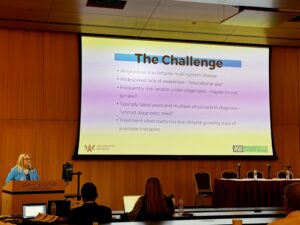
We were proud to be part of the 2nd annual Bradley Z. Naifeh Amyloidosis Conference 2024 at Houston Methodist! On day 1 the auditorium was filled with healthcare professionals who learned about the many facets of the clinical side of amyloidosis from experts such as Dr. Ron Witteles of Stanford and Dr. Angela Dispenzieri of Mayo Clinic.
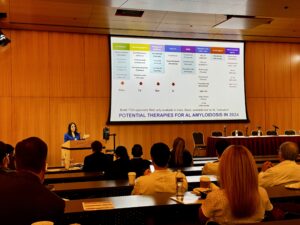
On day 2 the auditorium was packed with patients and caregivers of all types of amyloidosis, offering a wonderful opportunity to learn about the disease, resources available, and network with other patients and caregivers.
Mackenzie and Deb had the chance for a photo op with Megan Fleischfresser Naifeh (daughter of Bradley Z. Naifeh who lost his battle with AL Amyloidosis) and Dr. Arvind Bhimaraj (co-host of the conference).

We thank the Naifeh family for their support of this valuable annual conference.


Breaking News – FDA approves WAINUA for ATTRv-PN

The U.S. FDA has approved a new treatment for adults living with polyneuropathy of hereditary transthyretin-mediated amyloidosis (ATTRv-PN).

WAINUA™ (eplontersen) granted regulatory approval in the U.S. for the treatment of adults with polyneuropathy of hereditary transthyretin-mediated amyloidosis.
  • U.S. FDA approval based on Phase 3 NEURO-TTRansform results showing WAINUA demonstrated consistent and sustained benefit halting neuropathy disease progression and improving neuropathy impairment and quality of life
  • Additional regulatory reviews for WAINUA underway in rest of world
  • WAINUA will be available in the U.S. in January 2024

READ PRESS RELEASE HERE

“Many people living with hereditary transthyretin-mediated amyloid polyneuropathy are unable to fully enjoy their lives because of the relentless, progressive and debilitating effects of the disease,” said Michael J. Polydefkis, M.D., professor of neurology at Johns Hopkins University School of Medicine and an investigator in the NEURO-TTRansform study. “Approval of WAINUA represents a meaningful advancement in treatment, one that gives those who are living with transthyretin-mediated amyloid polyneuropathy help managing the disease.”

Presenting at the Amyloidosis Support Groups bi-annual ATTR conference

Hosted by Muriel Finkel and the Amyloidosis Support Groups (ASG), Deb Boedicker presented the Amyloidosis Speakers Bureau at the ASG bi-annual ATTR conference.

Mackenzie’s Mission joins the BU School of Medicine Dean’s Advisory Board

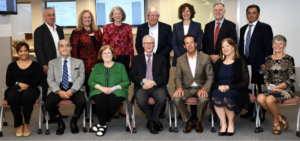
Mackenzie’s Mission is proud to join the Boston University Chobanian & Avedisian School of Medicine Dean’s Advisory Board (DAB) as a donor representative of the Amyloidosis Center, and nominated by Dr. Vaishali Sanchorawala.

The DAB provides the dean with counsel on issues affecting the school including strategic planning, external relations, and fundraising initiatives that facilitate the achievement of the dean’s vision for the School of Medicine.

Given our strong commitment to medical education, we look forward to supporting the dean (Dr. Karen Antman) and her important goals for future physicians.

This website uses cookies

This site uses cookies to provide more personalized content, social media features, and ads, and to analyze our traffic. We might share information about your use of our site with our social media, advertising, and analytics partners who may combine it with other information that you’ve provided to them or that they’ve collected from your use of their services. We will never sell your information or share it with unaffiliated entities.

Newsletter Icon